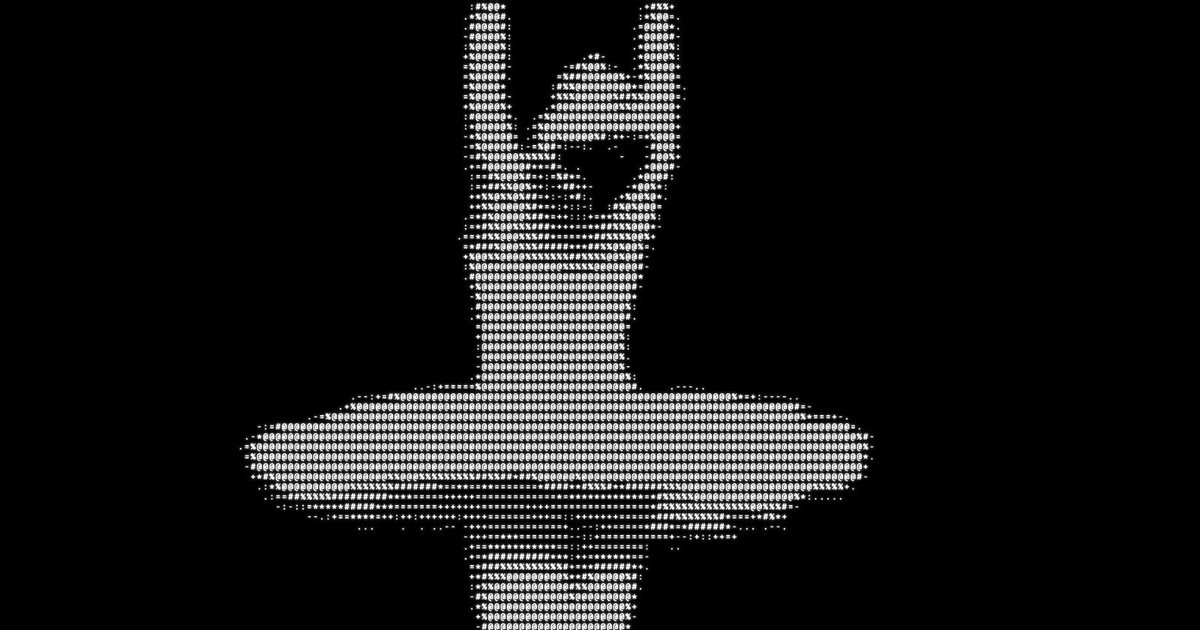
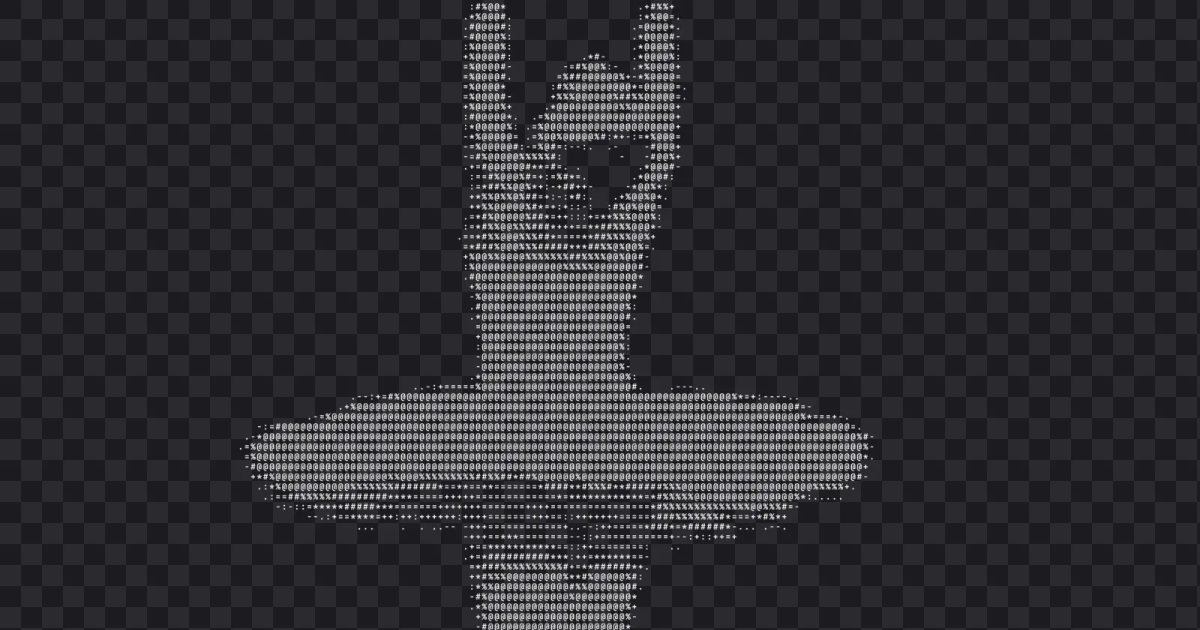
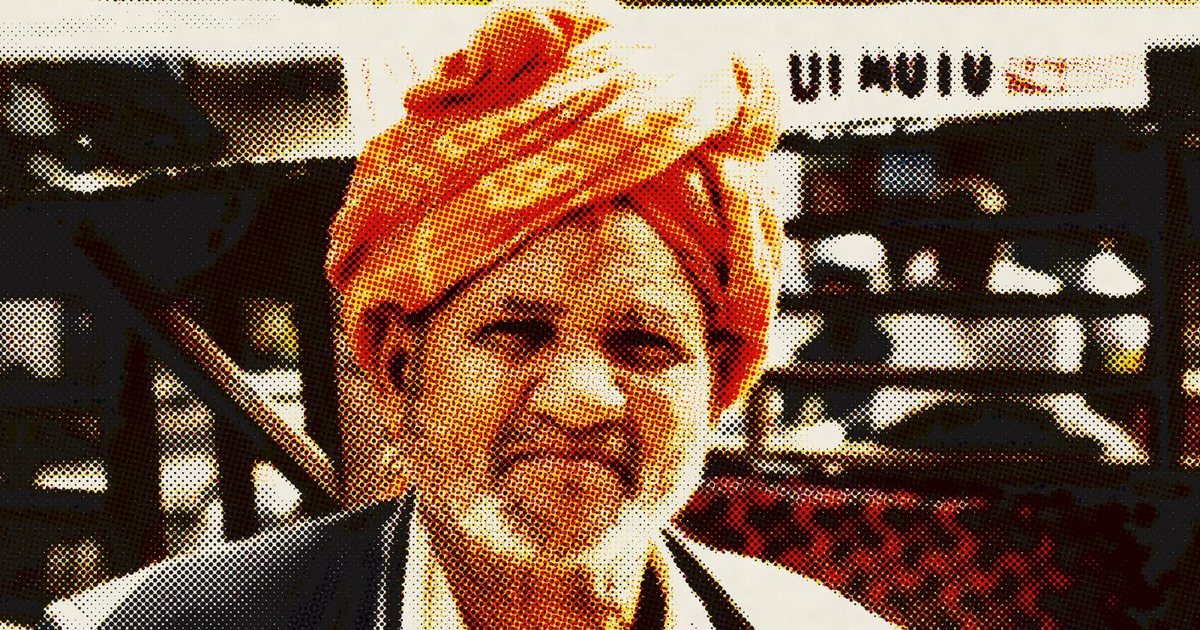
Every Style Comes from Somewhere: The Crafts Behind 6 Digital Image Effects
Most popular image effects imitate a physical process. Knit copies a loom, woodcut copies a carved block, Bandhani copies tie-dye dots, halftone copies newsprint, cyanotype copies a sun print, and infrared copies a thermal camera. Knowing the original craft helps you pick the right photo and settings for each.
A filter is easy to apply and hard to use well. The trick is that the best effects aren't random: almost every one imitates something physical, a craft or a machine with its own rules. When you know what the original looked like and why, you know which photo to feed it.
Here are six effects from Glyph Studio, each shown as the original photo on the left and the style on the right, with the craft behind it.
Knit: from the loom
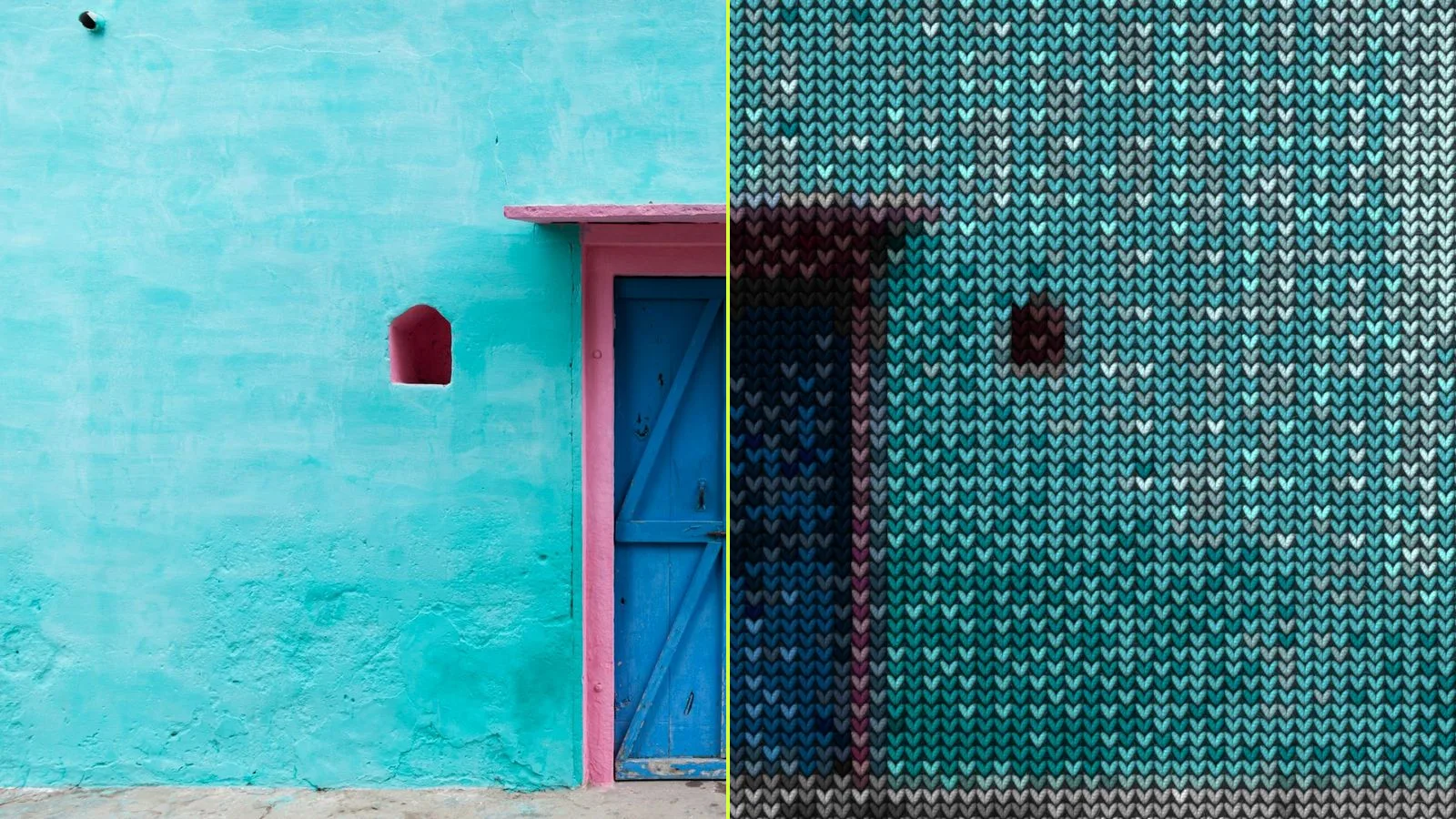
Machine and hand knitting build a picture from rows of V-shaped stitches. Each stitch is one colour, so knitted pictures are really pixel art made of yarn: flat areas of colour, soft edges, and a texture you can almost feel.
Works best on: strong, simple shapes and flat colour, such as a painted wall, a logo or a bold portrait. Fine detail disappears into the stitches, so don't fight it.
Try: the Knit style. Larger stitches make it read more like a jumper, smaller ones more like a photo.
Woodcut: from the hand block
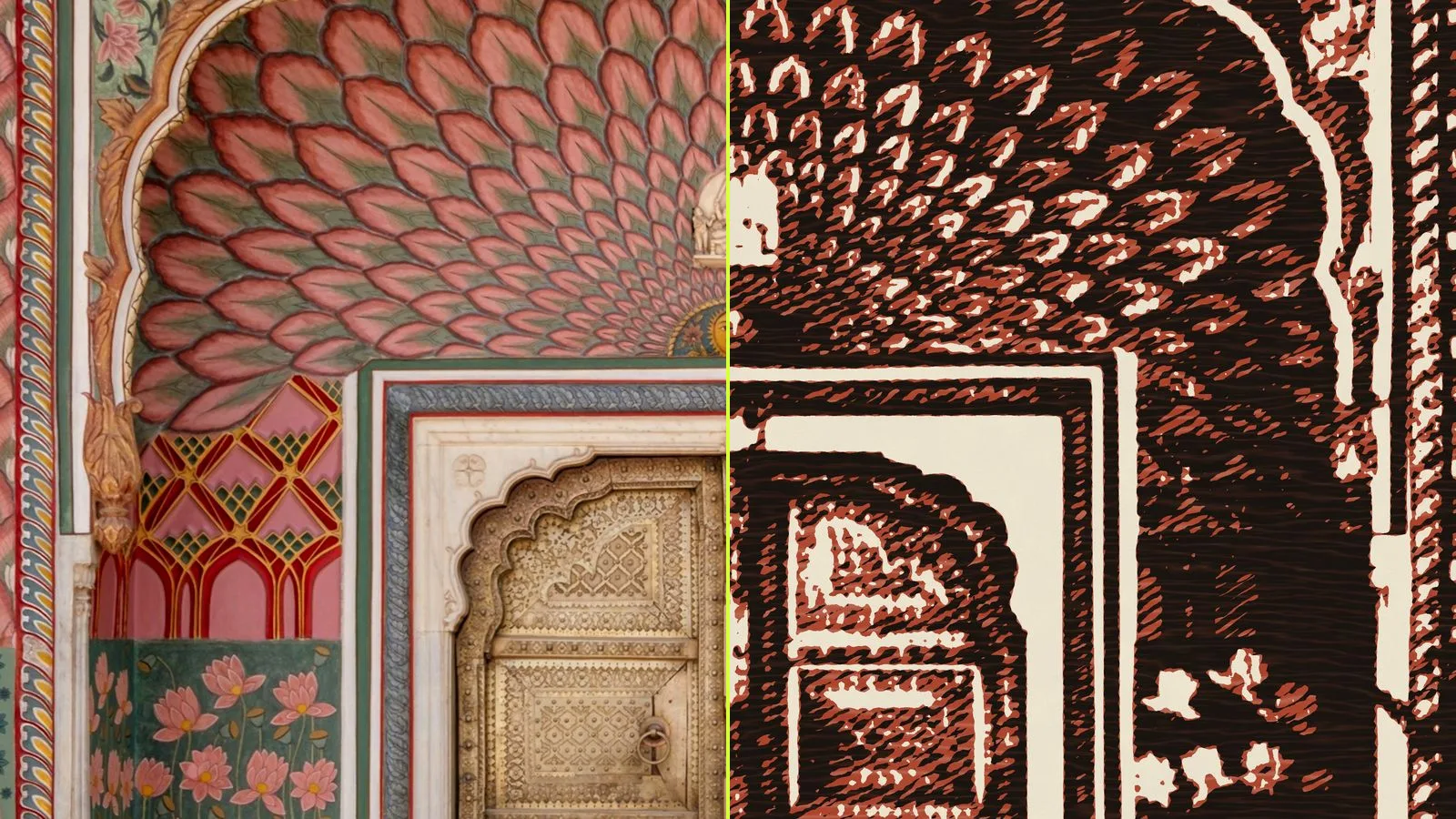
A woodcut is printed from a block where everything that should stay white has been carved away. What's left prints as solid ink, so a woodcut has no greys, only marks and gaps. Near Jaipur, the villages of Sanganer and Bagru have printed textiles from carved wooden blocks for centuries, and the same logic of bold carved shapes runs through woodcut prints worldwide.
Works best on: architecture, ornament and anything with strong lines, such as gateways, carvings and silhouettes.
Try: the Woodcut style, and the Block Print original if you want a repeating textile pattern instead.
Bandhani: from tie-dye
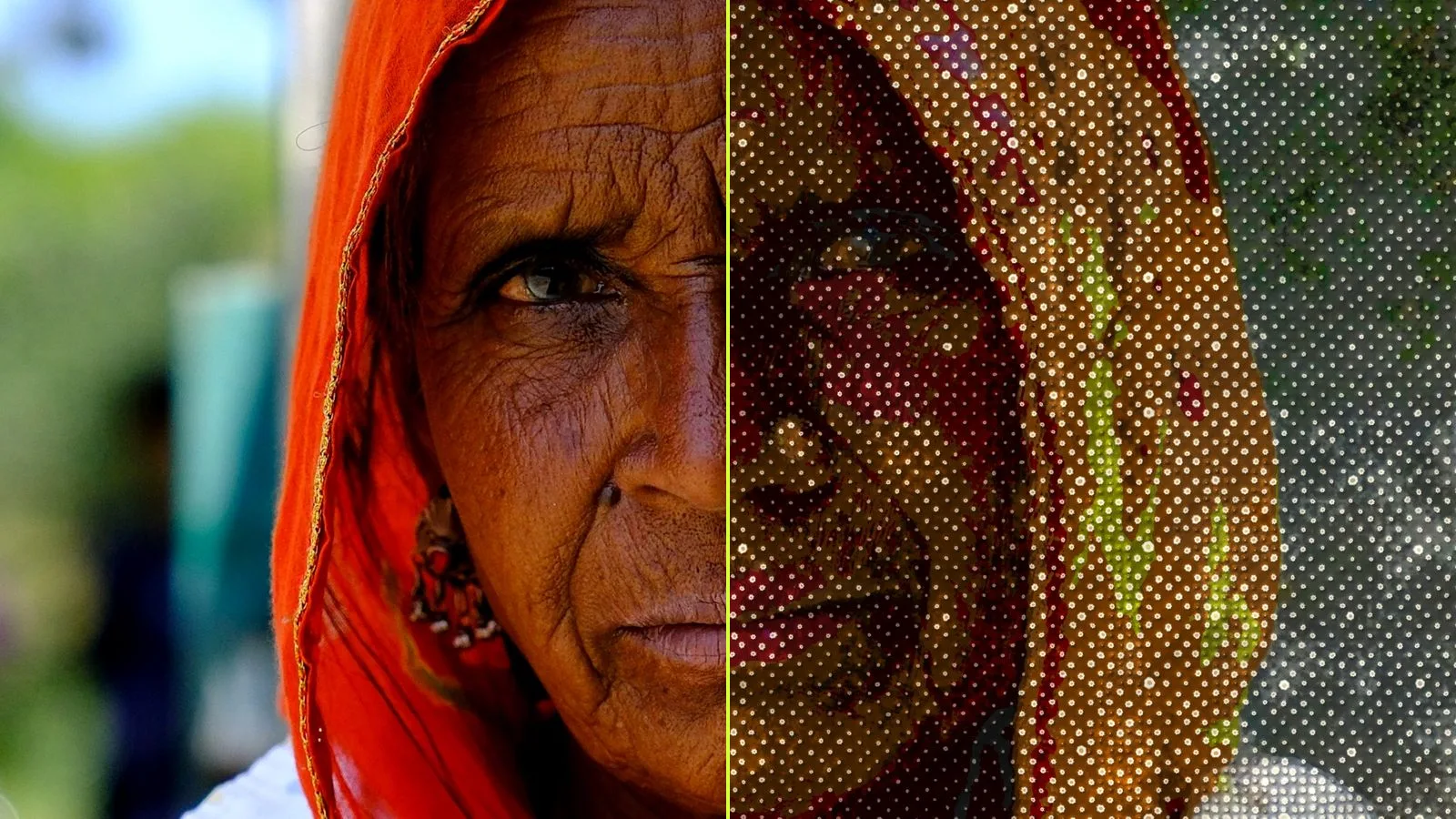
Bandhani, from Gujarat and Rajasthan, is a resist-dye technique: tiny points of cloth are pinched and tied tight before dyeing, so each one stays undyed as a small dot. A single dupatta can carry thousands of them. The result is colour built from a field of dots, with every dot slightly irregular because a hand tied it.
Works best on: colourful portraits and textiles, where the dots can pick up rich hues.
Try: the Bandhani style, one of Glyph Studio's originals, alongside Block Print and Kolam.
Halftone: from newsprint
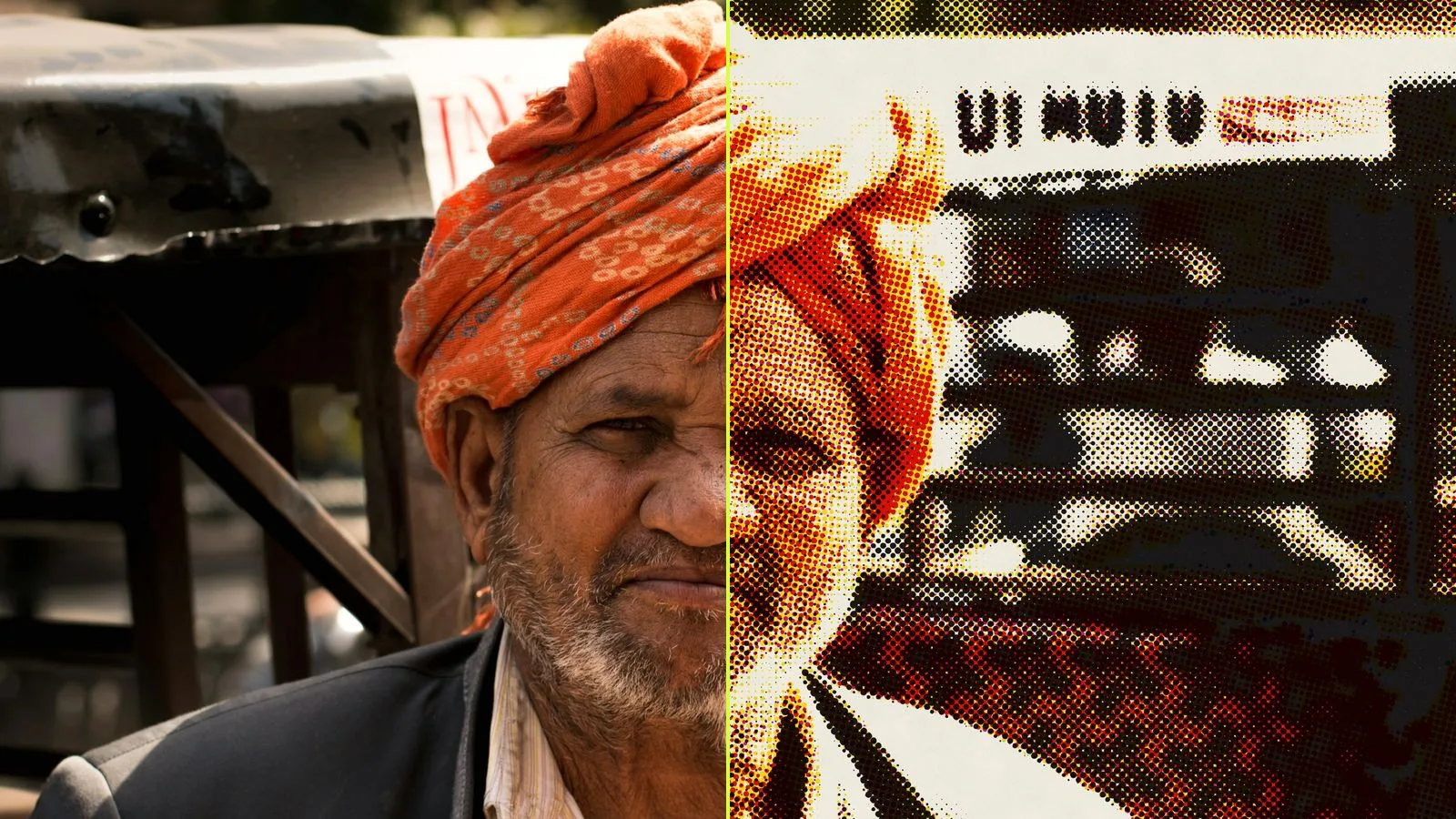
Printing presses can only print ink or no ink, so to print photographs they break tone into dots of different sizes: big dots for dark, small dots for light. Halftone made photos possible in newspapers from the 1880s on, and it still says "printed" at a glance.
Works best on: faces and anything with clear light and shadow.
Try: the Halftone style, in Mono for newspaper or CMYK for magazine colour. There's a full guide in Halftone effect: what it is and how to make one online.
Cyanotype: from the sun
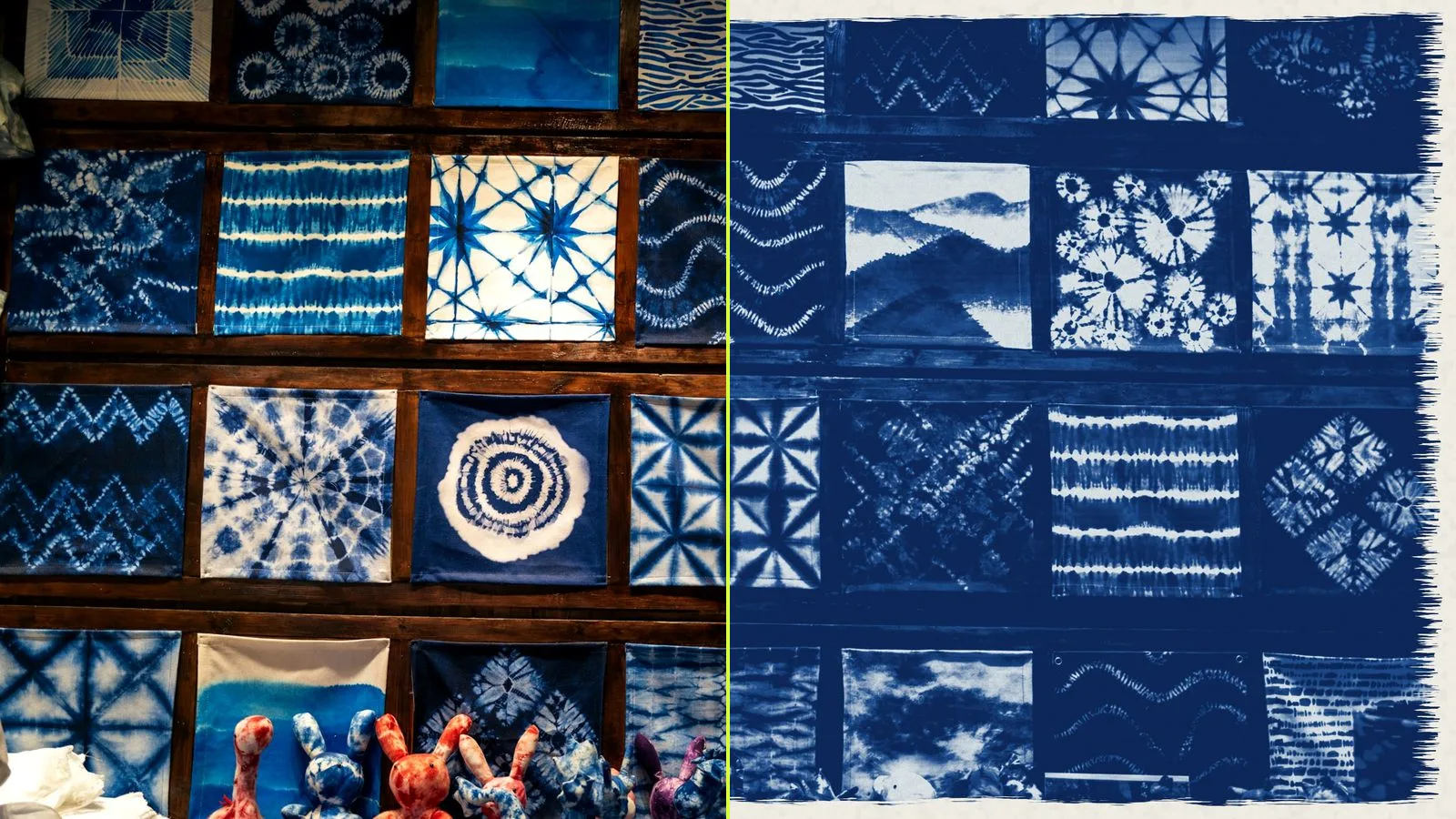
The cyanotype is one of the oldest photographic processes. John Herschel invented it in 1842: paper coated with iron salts turns deep Prussian blue where sunlight hits it. In 1843 Anna Atkins used it to make Photographs of British Algae, often called the first book illustrated with photographs. Architects later used the same chemistry for blueprints.
Works best on: plants, architecture and high-contrast scenes. Anything that would look good as a blueprint.
Try: the Cyanotype style, which adds the uneven brushed edge of hand-coated paper.
Infrared: from the thermal camera
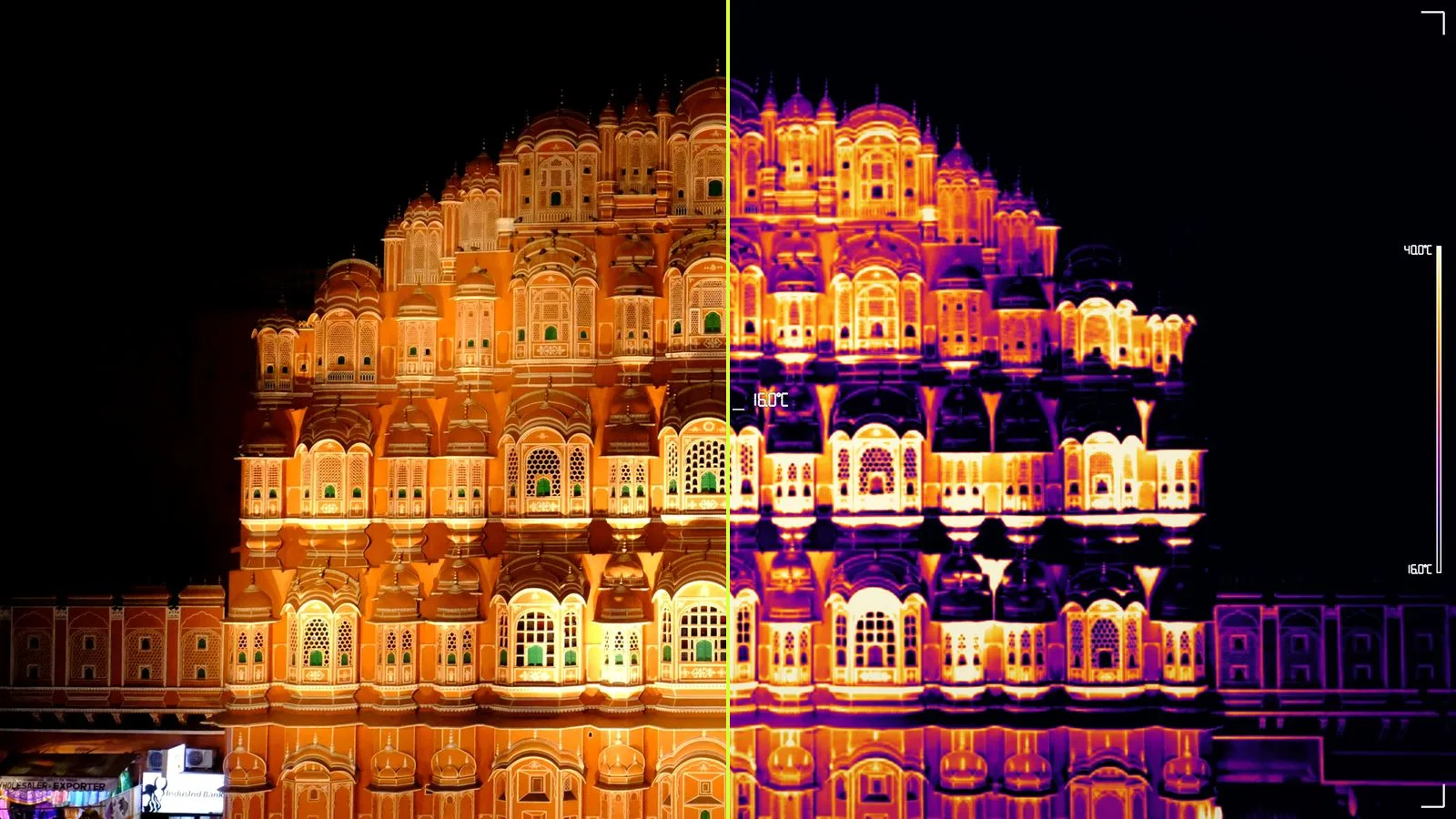
Thermal cameras see heat rather than light and map it onto a false-colour palette, usually from deep purple for cold to white-hot yellow for warm. The look carries associations of night vision, science and surveillance, and it turns ordinary scenes otherworldly.
Works best on: night scenes with bright lights, people, and anything with strong highlights, which become the "hottest" parts.
Try: the Infrared style. It even adds the temperature readout of a real camera.
Why the origin matters
Each of these crafts had limits: only stitches, only carved marks, only dots, only blue. The limits are the style. So pick photos that play to them. Give Knit and Woodcut bold shapes, give Bandhani and Halftone faces and colour, give Cyanotype a silhouette and give Infrared light in the dark.
Every style above is free in Glyph Studio. Drop in a photo and switch between them live; nothing is uploaded. For two more effects with deep roots, see ASCII art (typewriters and early computers) and dithering (early screens and printers).
FAQ
What is the Bandhani effect?
It recreates Bandhani, the tie-dye craft from Gujarat and Rajasthan where thousands of tiny tied points resist the dye and stay as dots. In Glyph Studio it turns a photo into a field of irregular coloured dots.
What's the difference between woodcut and block print?
A woodcut is a relief print from a carved block, usually a single image. Block printing uses carved blocks to repeat a pattern across fabric, as in Sanganer and Bagru near Jaipur. Glyph Studio has a style for each.
Who invented the cyanotype?
John Herschel invented it in 1842. Anna Atkins used it in 1843 for Photographs of British Algae, one of the first books illustrated with photographs.
Which photos work best for these effects?
Match the photo to the craft: bold shapes for Knit and Woodcut, faces and colour for Bandhani and Halftone, silhouettes for Cyanotype, and night scenes with lights for Infrared.
Are these effects free to use?
Yes. Every style in Glyph Studio is free with no sign-up, runs in your browser, and what you export is yours to use commercially.